
Build A Campfire
Cooking on a campfire can be a fun experience. It fuels our primal caveman nature. Make sure you enjoy a successful outdoor experience by following a few simple rules when it comes to building and lighting your campfire.
Outdoor Fire TipsMarch 14, 2025
Instructions
Prepare your site.
Pick a location for your fire that is at least 5 miles away from bushes, or any combustibles or overhanging branches.
Ensure your fire is built downwind from your accommodation.
Use large rocks to make a round or U-shaped perimeter.
If it is windy, ensure that the back of the fire pit faces the wind (so the wind takes any smoke to the back of the fire).
Put a large or a number of smaller rocks at the rear of the fire pit to act as a chimney, to help direct smoke up and away.
Lay Kindling
Fill your chosen fire area with paper or tinder and a couple of ZIP® firelighter cubes.
Lay the kindling over the paper, alternating the orientation of the wood for each layer to create a lattice pattern. Some campers prefer to make a ‘tepee’ shape.
Remember to light the firelighters with long safety matches and have a bottle of water or sand/dirt to smother any unwanted flames.
Once Ablaze
Once the kindling is fully alight, add the pre-found firewood. Wherever possible, ensure that the wood is of a similar size.
If available, use hardwood as it burns more slowly and reduces the amount of spitting.
When the flames have begun to die down, leaving mostly cinders, use a large, strong stick to push the cinders into a high concentration at the back of the fire and a lower concentration at the front. This gives the cook a choice of high, medium, or low temperatures for cooking.
To begin cooking, set the grill on the rocks. You can now place the food directly on the grill or in a pan and cook your meal in a truly authentic style.
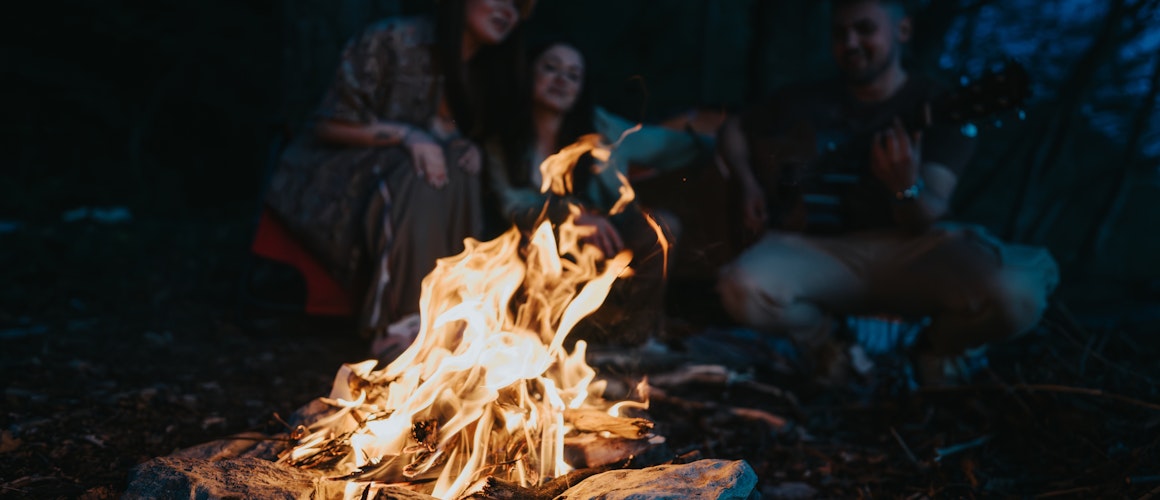
After cooking, add wood for the evening campfire, sit back and enjoy relaxing in the great outdoors whilst staying warm.
As the fires goes out, extinguish thoroughly with water, before turning in for the night.